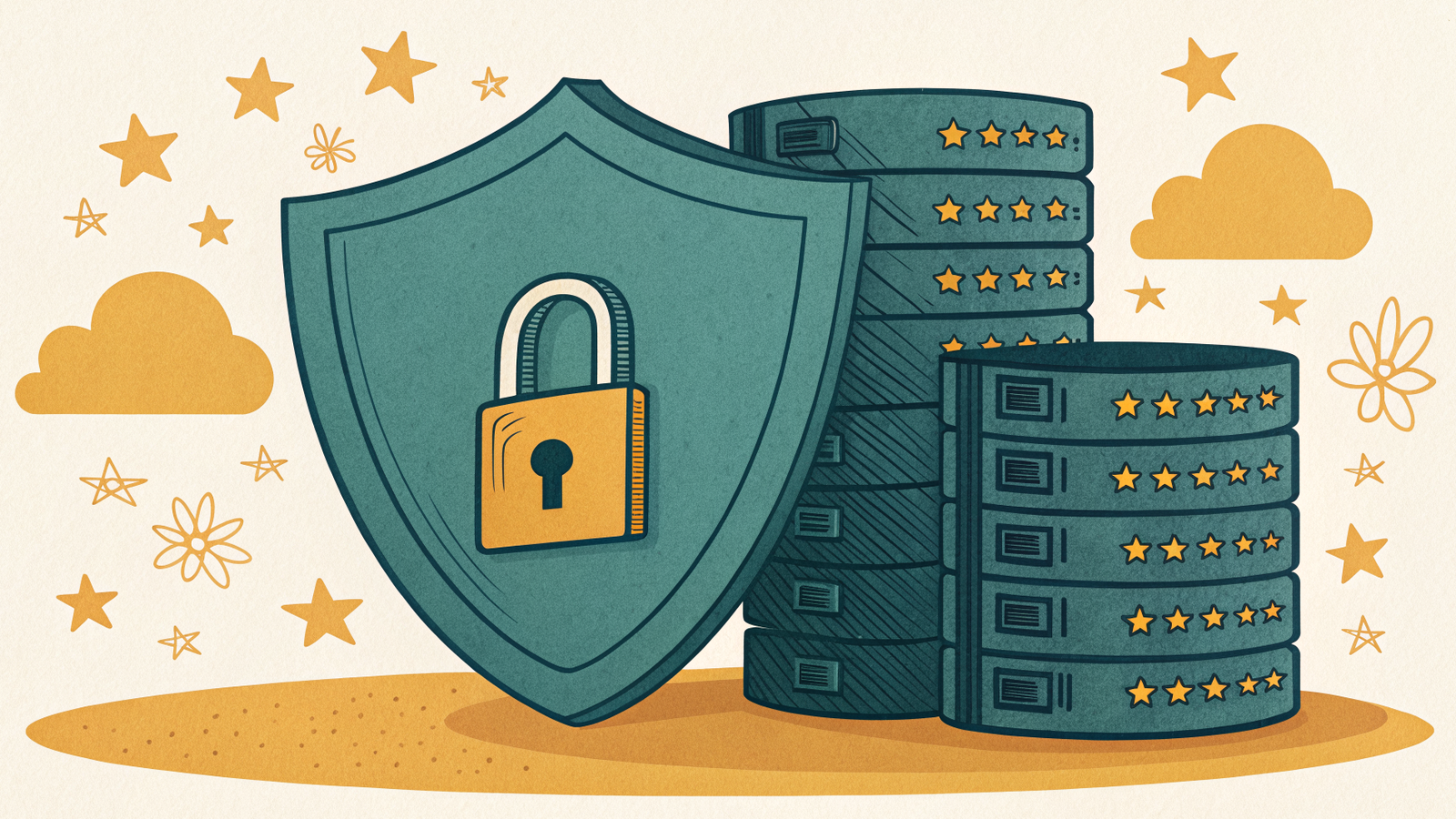
If you are comparing enterprise podcast platforms, you have likely outgrown the question most buyer's guides answer. The features that win a solo creator (one-click distribution, a clean dashboard, a low monthly price) barely register when procurement, IT and legal join the conversation. At that point the deal turns on data residency, access control and whether the vendor can survive a security review.
This guide leads with the eight criteria that actually decide enterprise deals, then compares three platforms that come up most often: Simplecast, Omny Studio and Springcast. We have tried to be fair about where each is strong. The right answer depends on your priorities, and we will say plainly where another platform fits better.
The 8 criteria that matter for enterprise
Consumer reviews rank platforms on polish and price. Enterprise buyers rank them on risk. Before you shortlist anyone, get clear on these eight.
1. EU data residency
Where does listener data physically sit, and who can lawfully access it? Since the Schrems II ruling, transferring personal data to US providers carries real legal risk for European organisations. For a public body, a bank or a hospital, EU residency is often the first filter, not a nice-to-have.
2. ISO 27001 certification
ISO 27001 is an externally audited information-security standard: a certificate with a scope and an expiry date, not a self-declaration. It is the single fastest way for a security team to gain confidence in a vendor. Ask which version (the current one is 2022) and what the scope covers.
3. SSO, role management and audit logs
Single sign-on (SAML or OIDC) means access follows your identity provider: when someone leaves, their access ends. Role management keeps editors out of billing; audit logs let you trace who did what. Without these three, an enterprise account is effectively a shared password.
4. Private and SSO-gated feeds
An internal or members-only podcast needs more than an unlisted link. A hidden RSS URL can be forwarded, indexed or guessed. Genuine control means authentication, ideally SSO-gated access or a branded app, so only the right people can listen.
5. A signed data processing agreement (DPA)
Article 28 of the GDPR requires a DPA with every processor. A serious enterprise vendor has a standard DPA ready and a clear process for notifying you of sub-processor changes. If you have to chase this, treat it as a warning sign.
6. Support and SLA
When an internal all-hands episode breaks an hour before publication, response time matters. Check the support model (email, chat, named contact), the guaranteed uptime, and whether an SLA is contractual or merely aspirational.
7. Billing model and procurement-readiness
Enterprises buy on invoice, in their currency, against a purchase order, not a personal credit card. Annual billing, VAT handling, a real contract and a vendor that answers a security questionnaire without flinching all smooth the path through procurement.
8. Multi-show governance
One brand show quickly becomes ten: HR, comms, a regional team, a product unit. Without isolated workspaces and central oversight, that sprawl becomes the compliance gap we wrote about in our guide to EU hosting for regulated industries. Look for multi-workspace control and a single view across every show.
How Simplecast, Omny and Springcast compare
The table below scores each platform against the eight criteria. We have kept it to widely-known, verifiable facts; where a detail depends on plan tier or a current contract, confirm it directly with the vendor before you decide.
| Criterion | Simplecast | Omny Studio | Springcast |
|---|---|---|---|
| Data residency | US-based | US/global (Microsoft-owned) | EU (data in the EU) |
| ISO 27001 | Confirm with vendor | Microsoft holds broad certifications; confirm scope for Omny | ISO 27001:2022 certified |
| SSO + roles + audit logs | Team roles; confirm SSO tier | Yes, enterprise-grade | Yes (SAML/OIDC, roles, audit logs) |
| Private / SSO-gated feeds | Private podcasts supported | Private & dynamic feeds | SSO-gated feeds + branded app |
| DPA | Available | Available (Microsoft DPA) | Standard EU DPA |
| Analytics / API | IAB-certified analytics; API | Strong analytics; API | IAB-aligned analytics; API + BI export |
| Billing | Card / plan-based | Enterprise contract | Invoice, EUR, procurement-ready |
| Best for | Polished US-centric hosting | Large broadcast & ad ops | EU data sovereignty & internal podcasts |
Simplecast: polished and simple
Simplecast (owned by SiriusXM) has long been respected for a clean interface and reliable, IAB-certified analytics. For a team that wants a straightforward, professional public podcast and is comfortable with US hosting, it is a strong, mature choice. Where it fits less well is the European compliance brief: it is a US-based service, so for organisations that cannot transfer data to the US, it rarely clears the first filter.
Omny Studio: built for broadcast scale
Omny Studio (part of Microsoft) is built for radio networks, publishers and large ad operations. Its strengths are dynamic ad insertion, large-catalogue management and enterprise-grade controls, backed by Microsoft's infrastructure. If your podcast operation is essentially a broadcast and monetisation engine, Omny is hard to beat. It is heavier than a comms team running a handful of internal shows needs, and EU data residency should be confirmed for your specific configuration.
Springcast: EU-native and compliance-first
Springcast is an EU-based platform built around data sovereignty: EU data residency, ISO 27001:2022 certification, SSO with role management and audit logs, and private, SSO-gated feeds for internal podcasts. It is the natural fit when a security review or a public-sector procurement is part of the deal. For a purely US ad-sales operation chasing maximum monetisation tooling, one of the US platforms above may suit you better, and that is fine.
The EU question: why data sovereignty is increasingly decisive
For a growing share of European buyers, this single criterion settles the shortlist. Data residency has moved from a procurement checkbox to a board-level concern, pushed by Schrems II, NIS2 and DORA. If your listeners are employees, patients or citizens, the question "could a foreign authority compel access to this data?" has a clear right answer.
This is also where EU-compliant hosting stops being abstract. An EU-based vendor with ISO 27001 and a standard DPA lets your security team approve the platform quickly, instead of escalating a transfer-risk assessment. For the legal background (Schrems II, the seven hosting requirements and a checklist) see our deep dive on EU hosting for regulated industries.
Enterprise buyers don't rank platforms on polish. They rank them on risk.
📋 Enterprise procurement checklist
- EU data residency confirmed: data in the EU, sub-processor list available
- ISO 27001:2022: valid certificate, correct scope
- SSO (SAML/OIDC) + role management + audit logs
- Private / SSO-gated feeds, not an unlisted RSS link
- Standard DPA + clear sub-processor change notice
- Analytics API / BI export for your reporting stack
- Support model + contractual SLA with uptime
- Invoice billing, your currency, security questionnaire answered
Frequently asked questions
Choosing with confidence
Start from your own constraints, not the feature list. If a security review or EU procurement is in play, weight data residency, ISO 27001 and access control first, and an EU-native platform will usually win. If you are running a public, monetised show at broadcast scale, weight ad tooling and catalogue management instead. Either way, run the checklist above and ask for evidence on every line. If your next step is an internal show, our guide to starting an internal podcast walks through the practical setup. If you are still comparing hosts on capability, the article on Buzzsprout alternatives covers the broader creator-facing market, while how to choose a podcast host applies the same evaluation framework to enterprise requirements.