Hire the professionals
Don't try to cobble it together yourself, it'll come across as amateurish. Have conversations with makers and arrive at a polished product together. Reinventing the wheel for something you don't understand isn't worth it.
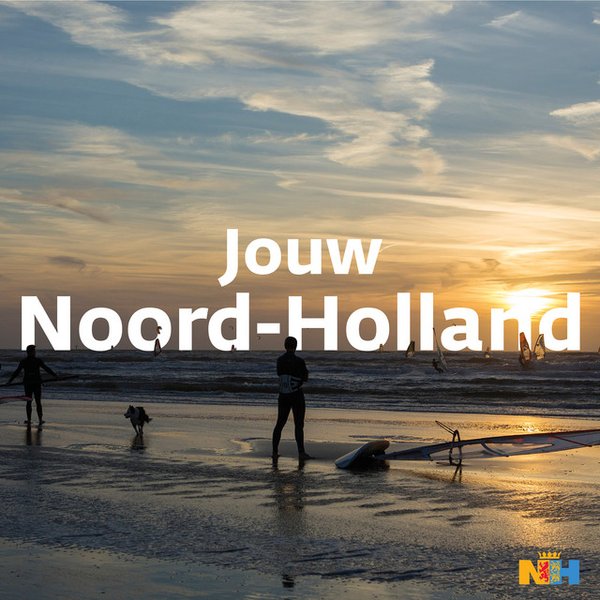
When Pascal van Wessel and Melanie Zierse joined the Province of North Holland in 2020, "podcast" sat at the top of the list of new things to try. No format, no experience, but a clear question: how do you show what a province does, in a way people enjoy? The answer became Jouw Noord-Holland ("Your North Holland"). Two seasons later, the numbers speak for themselves.
"If you put time and attention into it, it's a wonderful way to make complex topics accessible, and to connect more with residents."Melanie Zierse, editor, Province of North Holland
Many people aren't quite sure what a province does. That's a communications problem, and exactly the one Pascal and Melanie set out to solve. Not with a brochure or a press release, but with a channel that makes complex topics accessible: nature, the economy, culture, climate, technology and traffic.
A second ambition came on top: reaching a younger audience than the province was used to. And a third reality: they were starting from zero. No existing format, no podcast experience, but plenty of enthusiasm across the editorial team and the communications department.
"When I tell people I work for the province, they often don't really know what a province does. One of our goals was to show, in an enjoyable way, what we work on."
Melanie Zierse
It started with a big brainstorm involving the whole editorial team: what exists in the podcast world, and what fits what the province wants to tell? From there, a small team of two or three people took the lead. They brainstormed further in pairs, on topics, goal and audience.
Once the idea was concrete, the province approached three podcast agencies for a conversation and a quote based on one season of ten episodes. With the chosen maker they reviewed three formats, a history podcast, a future podcast about 2050, and the eventual concept: one playful question per episode, answered with the help of colleagues and residents.
The format is clever. Each episode revolves around a single central question, about half submitted by residents. Host Rolien finds the answer through a conversation with a province colleague and one or more residents. By the end of the episode, after some 12 to 15 minutes, the question is answered, and that answer is the episode title. The very first episode: "How does a fox know where to cross the motorway?"
The editorial team does all the prep themselves: devising questions, working out sub-questions, lining up the right colleagues and residents. Maker Sander de Heer edits the recordings with a theme tune; the team gives one round of feedback, then the final version goes live. Turnaround: roughly four weeks per episode, from briefing to promotion.
Two seasons of ten episodes produced hard numbers, and a few surprises.
The podcast reached 33,000 downloads and 8,000 unique listeners (unique IP addresses). But the biggest surprise was a side effect: the dedicated podcast page on the province's own website drew 12,000 unique visitors. That page performs so well that the podcast gets more listens there than via the big apps, an experiment to send listeners straight to Spotify produced fewer clicks.
The province also commissioned research among 220 residents. The findings: 39% would definitely or probably listen to more episodes, 29% would share the podcast, and 25% wanted to subscribe. The best result was about perception: roughly a third came away with a more positive view of the province after listening.
"Our podcast page genuinely adds value. We kept improving it, and that's exactly where the podcast gets listened to most."
Pascal van Wessel
Consistency is the foundation. Every episode drops on a fixed day, two weeks apart, so listeners know when the next one is coming. Each release comes with a news item on the province's own website, followed by sharing on X (Twitter), Facebook, Instagram and LinkedIn. Facebook and Instagram get additional paid promotion, and Facebook turns out to drive by far the most traffic.
Reactions are mostly positive, though it depends on the topic. An episode about wind turbines instantly drew dozens of comments, not always about the episode, but about the theme itself. A familiar phenomenon for any government communication: the channel works, even when the conversation drifts to something else.
Jouw Noord-Holland shows exactly where Springcast makes the difference for government: a branded, on-domain podcast page that holds listeners better than a redirect to Spotify, plus the analytics to back up downloads, unique listeners and listening behaviour, the figures you need to justify budget and impact internally.
For a government organisation, it also matters that data is EU-hosted and GDPR-proof, and that an accessible web player includes everyone. That's precisely what the Springcast platform for government is built for.
Should you have your own podcast website? For us, that's an emphatic yes.
Don't try to cobble it together yourself, it'll come across as amateurish. Have conversations with makers and arrive at a polished product together. Reinventing the wheel for something you don't understand isn't worth it.
A podcast is a process, not an idea you put live next week. Taking the time, and bringing in good people who walk you through it, directly contributed to the format's success, in Pascal's view.
"Reinventing the wheel for something you don't understand isn't worth it. Just hire professionals."
Pascal van Wessel
Whether you want to make topics accessible, reach a younger audience or share knowledge internally, Springcast provides the platform: EU-hosted, GDPR-proof, with your own podcast page and the analytics to prove your impact. You bring the stories. We make it possible.