Start with the story
Not with the technology, not with "we want a podcast". Answer the three questions first, what story, for whom, in what form, or don't start at all.
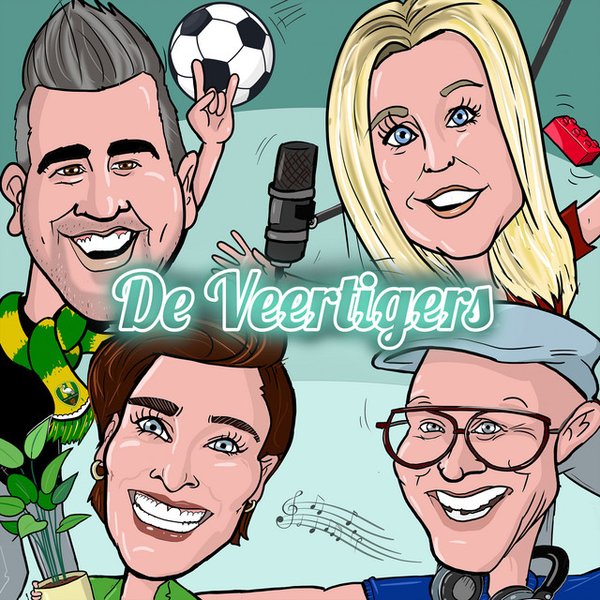
Sander de Heer is a familiar voice on Dutch radio, producer and sidekick to Ruud de Wild, years of the morning show on NPO Radio 2, now station manager at Sublime FM. In lockdown he started De Veertigers ("The Forty-Somethings") just for fun; five seasons later it's a fixture. And he helps companies do the same, not "let's just do a podcast", but a story people will choose to keep listening to.
"I think the love for audio will always remain, or can only grow."Sander de Heer, station manager Sublime FM & maker of De Veertigers
Most companies start at the wrong end. They want "a podcast", because everyone tells them they should have one, without knowing what it's about, or who it's for. Sander de Heer sees it at big communications departments that understand everything except audio. People who have spent years on video, online, newsletters and print, but never asked the one question that matters: how do you reach the ears, the imagination of a listener?
Then comes his sharpest question, and he's strict about it. Who is going to listen, voluntarily and in their own free time, to half an hour of a podcast about a bank, if that podcast is only about the bank? A sales pitch in audio form gets no one to listen through. And a podcast that isn't part of your whole communications mix simply stalls: a few nice conversations sitting somewhere online, heard by twenty colleagues and some family.
"Who's going to voluntarily listen to a podcast, often in their free time, about a bank, if it's only about that bank? Nobody listens to that of their own accord."
Sander de Heer
Sander never starts with the technology. He starts with three questions, and only once they're answered does the microphone go on: what story do you want to tell, who is that story for, and how are you going to tell it? "What's the goal of your podcast? What do you want to tell, and to whom?" Phase one is persuasion, showing that audio really is a good tool, and working out together who you're making it for and why. The form comes only in phase two: a conversation around a table, out on the road, interviewing people in the street. Story first, format second.
That sense of urgency is the whole point. You have to feel that these stories need telling, right now, because your customers or patients are missing something only you can tell them. And a podcast can work just as well internally: a whole onboarding process for new staff fits perfectly into audio.
Then the recording, which Sander does himself. Not only to keep the price attractive, but because in that moment he combines directing, coaching and recording. He adjusts while it runs: "Put that script aside. How does this feel to you? Tell it in your own words." Because the moment someone reads out a script that's been approved three times over, you hear it instantly, it just doesn't feel right.
For the podcast he made for PwC (via content agency NS5), the strategy was set internationally, with little room to move. The breakthrough came during the recording: the host, an American, set the approved scripts aside and did it from memory. He'd lived the strategy, understood the background, and suddenly it clicked. That's exactly the difference between a podcast you switch on and one you switch off.
"All those scripts and that strategy are on paper, but I'm going to tell it from myself. And then it worked, because he lived it and didn't read it off the page."
Sander de Heer
The best proof of Sander's own method is his own show. De Veertigers began in the 2020 lockdown as a hobby project, one idea: forty-somethings run into things, is there something in that? He found the right group: Jet, Manuel and Wietske, four forty-somethings of completely different stripes. Wietske is the youngest, in a rented flat in Amsterdam with small children. Sander swapped Amsterdam for nature near Amersfoort. Jet lives in a loft in Rotterdam and her son has already left home. Everyone different, and that's precisely what makes it a strong format.
Because forty-somethings get overlooked. Twenty-, thirty- and fifty-somethings all have their own corner; the group in between doesn't, even though plenty is going on. Older children, a career, a mortgage, rising energy bills. It's about parenting, but just as much about love, sex, hobbies and going out, can you still pull an all-nighter, and should you mind if you can't anymore?
In five words: a laugh and a tear. On one side they're in stitches about the eighties and the daft memories. On the other, the real things come to the table: how their parents are doing, a death within the group, the dementia diagnosis of Sander's father. It's a chat podcast, but with a purpose. And it works for one reason that applies to any organisation brave enough: they're all different, and they dare to be sincere and honest.
Sander sees the field turning. Three years ago it was: we want a podcast, doesn't matter what about, because everyone says we should. Now it's different. Companies have tried it, it didn't quite land, and they want to professionalise. And anyone starting out now won't get through with a standard chat podcast, you have to have thought it through better than that.
That step up comes with data. Not as an end in itself, but to understand what works: where does a listener lean in, and where do they drop off? Sander often shows his clients a timeline, the ideal build, with tension, a strong opening, a theme tune. And one hard lesson: never make it longer than half an hour. If you hold someone's attention for half an hour, you should be delighted. Sometimes twenty minutes is already quite a lot.
That exact thing, seeing where attention falls away, is where the data point the way; the craft keeps playing.
Never make it longer than half an hour. If you already have someone's attention for half an hour, you should be very happy with that.
Sander names exactly where a platform makes the difference. He says you can "see precisely where the listener leans in and when they leave", and that this is genuinely interesting data. For a maker who swears by the ideal timeline and by that half-hour attention ceiling, that's the tool beneath the conviction: seeing whether people keep listening, and exactly where they drop off. That's what listener analytics is built for.
A podcast like De Veertigers also asks for what Sander calls the most future-proof form: on-demand. No waiting for an FM frequency, you publish once and let it travel to the listener digitally, who starts whenever it suits them. That's exactly what hosting & distribution does, upload once, in every app.
And for makers like Sander, who make podcasts for law firms, banks and governments, one thing weighs even heavier. Those clients work with sensitive material and strict requirements. A platform that's EU-hosted, GDPR-compliant and ISO 27001-certified is then not a nice-to-have but a precondition, whether you're working for the financial world or producing as an agency for several clients.
Should every company podcast? Not necessarily. But anyone considering it takes away four lessons from 25 years in audio and five seasons of De Veertigers.
Not with the technology, not with "we want a podcast". Answer the three questions first, what story, for whom, in what form, or don't start at all.
A podcast that's only about you is one nobody listens through. Make something your listener gets value from, not a sales pitch.
A script approved three times over and then read aloud, you hear it instantly. Bring it from yourself, in your own words. Then it rings true.
A few conversations sitting online won't take off on their own. Treat your podcast as seriously as your newsletter: with consistency, as a regular channel to your audience.
"What are the stories you want to tell, and have to tell, in this day and age? Only once we have that in view does the question come: okay, so what are we going to do?"
Sander de Heer
Whether you want to share knowledge internally, give your brand a voice or build a series people listen through, Springcast provides the platform: EU-hosted, GDPR-compliant, ISO 27001-certified, with distribution to every app and the analytics to see where your listener stays. You bring the story. We make it possible.