
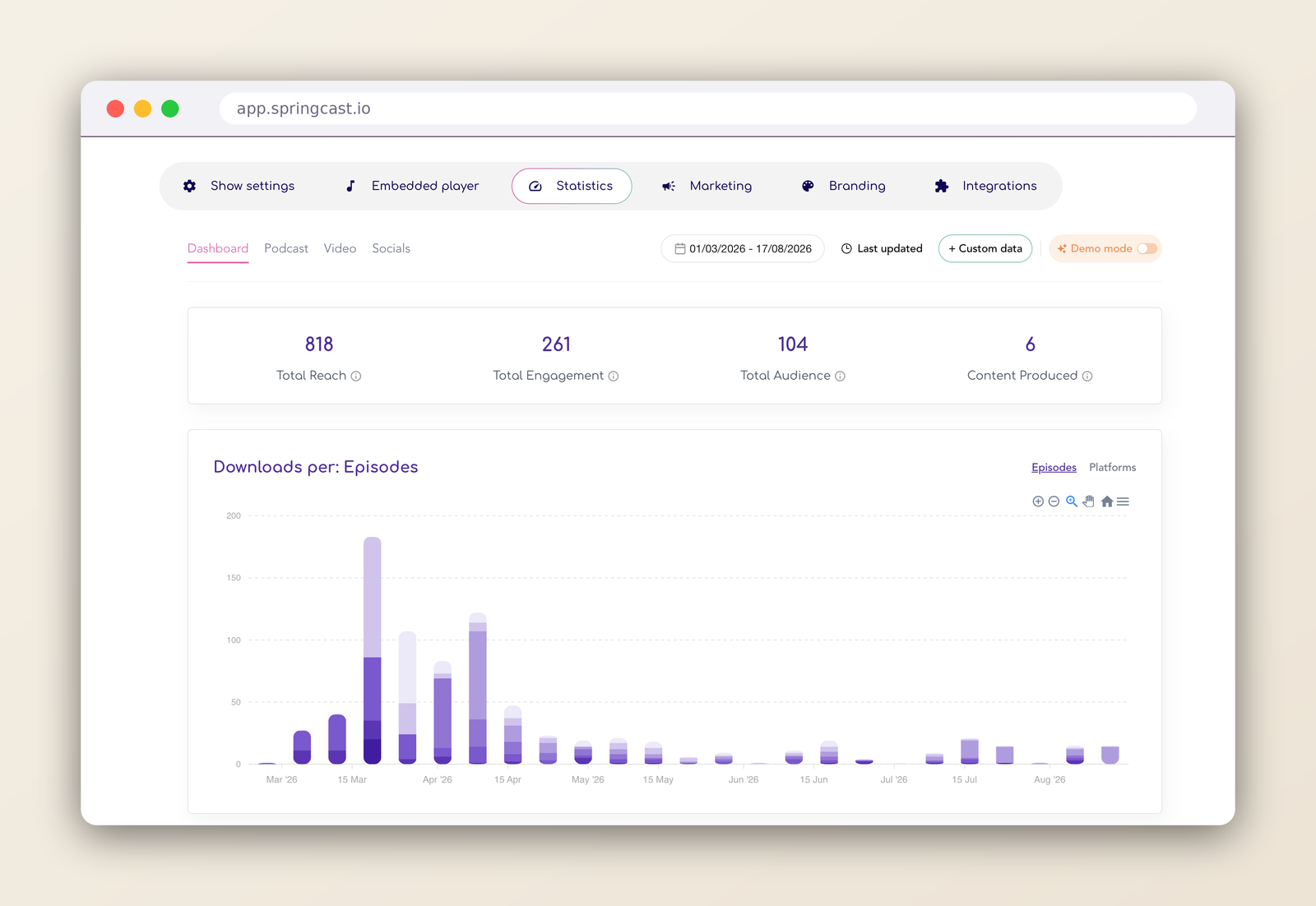
A reach of just over 800 since March 1. Five episodes live. And no new episode in two months. Not a customer case. My own podcast.
Podcasting has a word for it: podfade. The show stops without an announcement and the feed lingers in the directories, like a shop with the lights on and the door locked. I have been building a podcast platform for years, and it still happened to me.
The numbers show how normal that is. In August 2026, WhichPodcast analysed almost 37,000 shows listed in major directories such as Apple Podcasts and Spotify. Within that group, 5 percent had been silent for more than six months and the median publishing span was 2.4 years. The full RSS universe holds more than 4.5 million feeds (Podcast Index, cited in the WhichPodcast methodology, as of 13 August 2026). Within that universe, analyses estimate that over 60 percent of feeds have been silent for six months or longer.
Springcast customers have told me for years that a podcast takes a lot of time and energy. Now that I am in the dip myself, I see that this is not where it goes wrong. It comes down to rhythm.
Look at how it went wrong for me. When I miss a deadline, my editor misses it too. If he is busy, my process stalls. One guest cancels and the whole schedule collapses. Before you know it everything starts to sputter, and then motivation sinks.
That is the dangerous moment. One missed episode does not kill a podcast. A lost rhythm does.
The creators who do make it through do this differently. They pick a pace they can sustain for six months, busy weeks included. Biweekly and consistent beats weekly and abandoned. Listeners forgive a calm pace; they do not forgive a feed that stops mid-sentence.
They build a buffer, so the rhythm does not depend on one deadline, one editor or a guest who cancels. Two or three episodes in reserve costs a single weekend and absorbs every dip. In Springcast you schedule those episodes ahead of time, so publishing continues while your week falls apart.
They automate the work after the recording. From the Professional plan onwards, Sky AI produces unlimited transcripts and turns an episode into a description, a blog post or a social post. The hour you win back per episode is exactly the hour that would otherwise eat your motivation.
And they watch the right numbers. That reach of 800 says little about week one or viral growth. What my analytics do show is how many listeners finish an episode and where they drop off. A hundred listeners who stay until the end are a foundation.
I have said out loud that I will build the number 1 business podcast in the Netherlands. I keep saying it, because it keeps me honest. A reach of 800, five episodes, and rhythm again from September: a buffer in reserve and a pace I can sustain.
I have a rhythm to win back. Chances are you have one too. Record your next three episodes and schedule them ahead. Try Springcast free for 14 days, no credit card required.